- Pick & Scroll News by The Aussie Corporate
- Posts
- 🗞️ In the money
🗞️ In the money
The net wealth of Australia's richest households jumped 24% since 2019. The typical household's net worth didn't move.

Pick & Scroll News
May 12, 2026
Was this email forwarded to you? Sign up here

|  |
Good morning. According to a new study, just a 10-minute session with an AI assistant can lead to users significantly abandoning their own capacity for reasoning.
The test showed a 20% decrease in the solve rate compared to those who operated without AI support.
So........ should we start doing things ourselves again?
All the headlines and more below...
THE MEDIAN AUSTRALIAN HOUSEHOLD IS WORTH $700,000. FIVE YEARS AGO IT WAS $701,000.
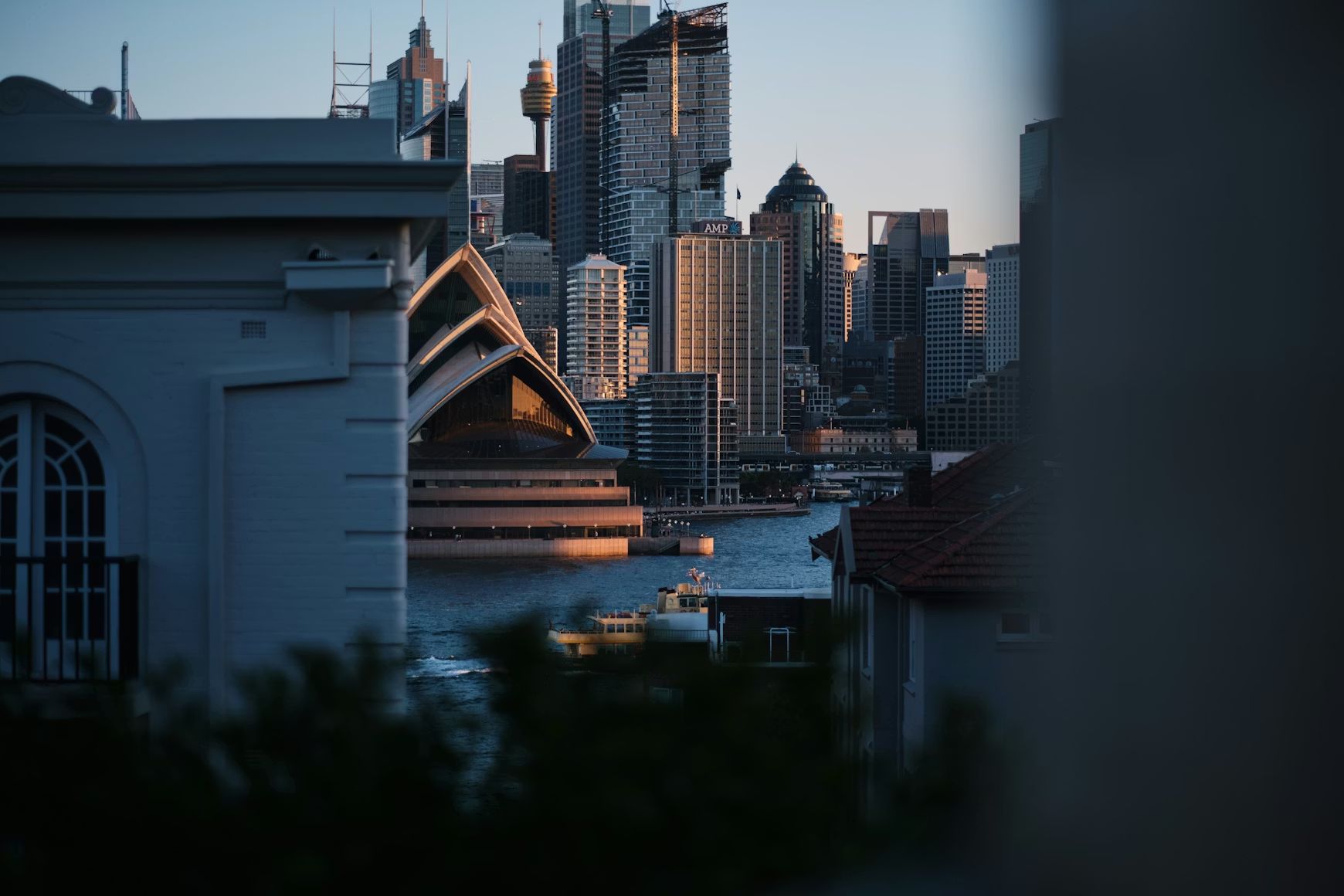
The net wealth of Australia's richest households jumped 24% since 2019. The typical household's net worth didn't move. Average household wealth climbed from $1.26M to $1.56M between 2019 and 2024, driven almost entirely by property price growth among those who already owned.
Households worth more than $1.6M now make up 22% of all households, up from 15% a decade ago.
Before the pandemic, wealth increases were distributed more evenly. Between 2014 and 2019, median household wealth grew 11% and average wealth grew 10%. Since 2020, only the top has moved. The number of households worth more than $1.6M has grown by 7% every year for 5 years. Overall household growth sits at 2.1% annually. House prices rose 46% in Sydney, 91% in Perth and Adelaide, 86% in Brisbane.
The middle wealth bracket, those with net assets between $300,000 and $900,000, has shrunk from 34% of households a decade ago to less than 28% today. That bracket used to be replenished by first home buyers entering with around $200,000 in deposits. That pipeline has slowed.
Some young Australians now assume they'll only buy property once they inherit one.
AUSTRALIAN NEWS
The government is preparing budget reforms that scrap negative gearing on existing properties, wind back CGT discounts and introduce a short transition period, prompting warnings it is now too late or risky for investors to rush purchases. LINK
Australia's wealthiest households have surged ahead on the back of soaring property prices as median household wealth stagnates and the middle class shrinks. LINK
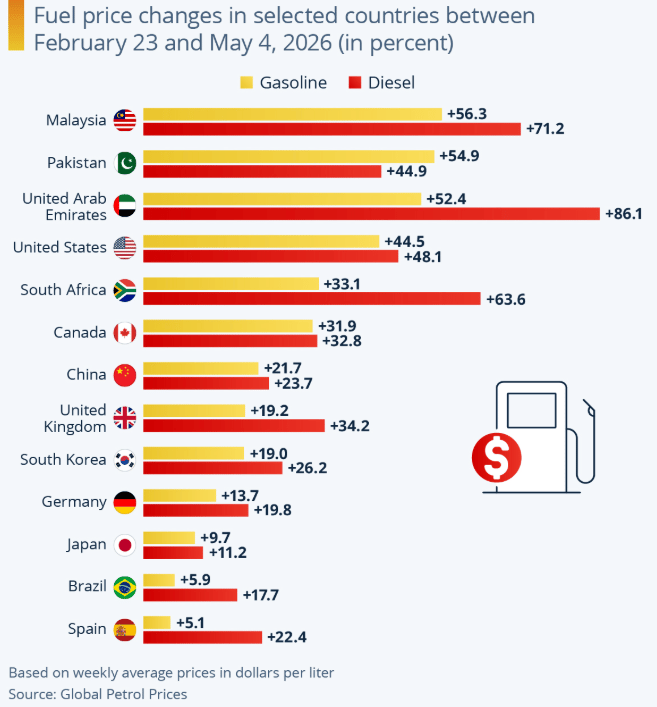
RACV has warned against Australians panic buying unsuitable EVs as the Strait of Hormuz closure drives EV market share almost doubling and RACV EV searches jumping 461%. LINK
Treasurer Jim Chalmers has flagged “difficult but necessary” budget tax reforms including tightening negative gearing to new builds and restoring CGT indexation to pre-1999 levels while promising no big cash splashes. LINK
Australia’s federal budget has gained an extra $11.4B this year and an expected $71B over 4 years from higher commodity prices and inflation, while households face increased cost-of-living pressures. LINK
The federal government’s planned replacement of the 50% CGT discount with an inflation indexation system has been estimated to lift a 20-year investor’s tax bill from $68 to $101 on a $288 gain. LINK
THE BUDGET IS $11B STRONGER BECAUSE YOU'RE PAYING MORE FOR EVERYTHING
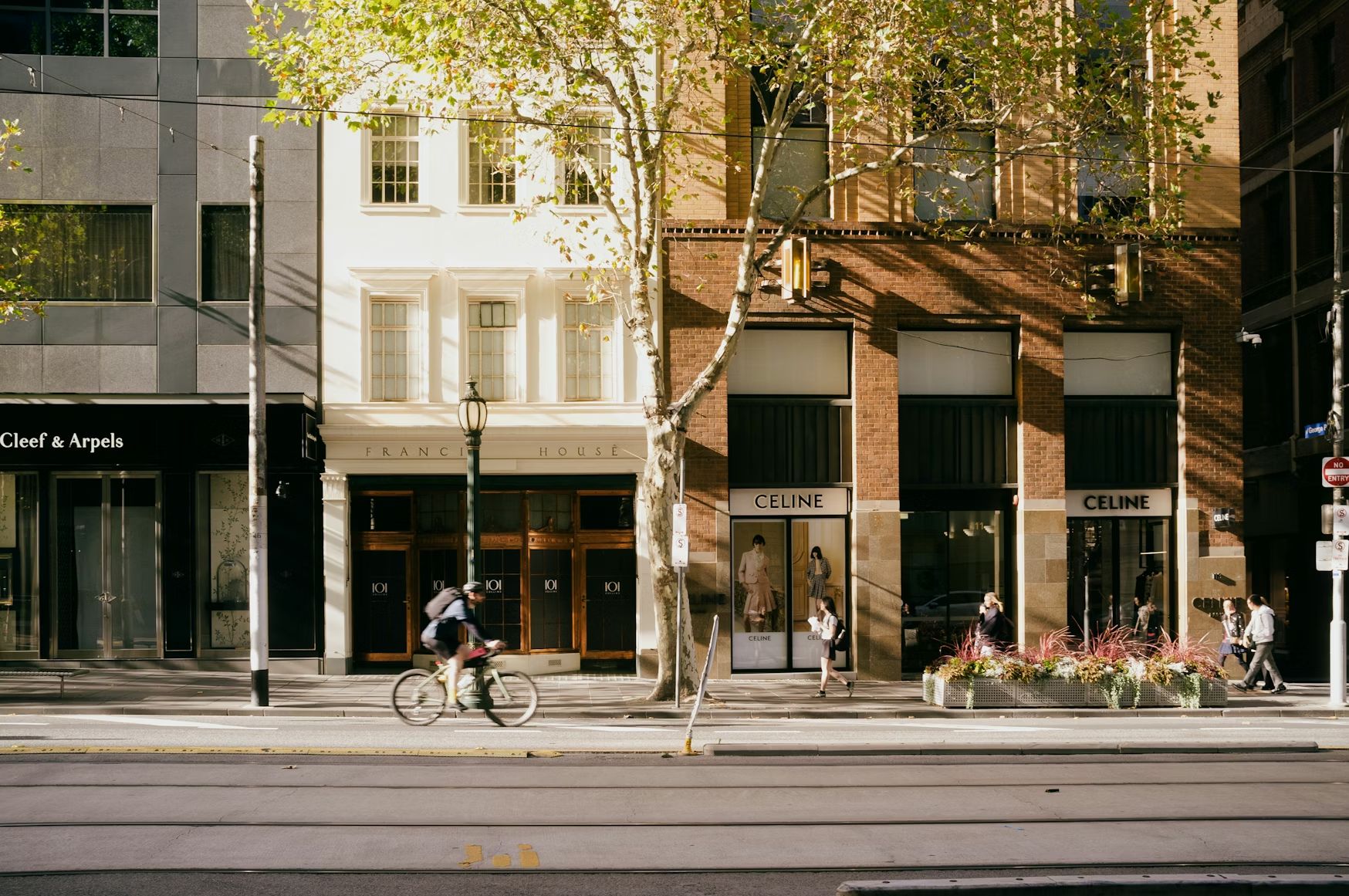
Australia's budget is tracking $11.4B better than forecast this financial year, driven entirely by higher inflation and commodity prices. Oxford Economics says the government is getting a short-term revenue boost from "the cost-of-living crunch." Higher prices mean more GST. Higher fuel and iron ore prices mean more royalties and mining tax.
Oil hit $167 a barrel in April. It was $80 in January.
Inflation jumped from 3.7% to 4.6% in one month. Over 4 years, Oxford Economics estimates the windfall at $71B. Gross debt is sitting at $964B. Net debt is $587B. There's still unlikely to be a surplus across the forward estimates.
The RBA's base case now has GDP growth slowing to 1.3% in 2026 and inflation staying at 4% this year instead of the 3.6% predicted in February. In worse scenarios involving a prolonged closure of the Strait of Hormuz, inflation could hit 5.2% and unemployment 5.1%. AMP's chief economist is urging the government not to spend the windfall and instead cut $100B over 4 years to ease demand and take pressure off the RBA.
COMPANY NEWS
Westpac chief executive Anthony Miller said the bank is seeing tangible outcomes from AI use as it grapples with disclosing costly token consumption and productivity impacts. LINK
Xero apologised for 5 days of platform disruptions and said the firm is investigating root causes while working with the Australian Taxation Office. LINK
Inghams reaffirmed its FY26 EBITDA guidance of $180M to $200M as modest poultry volume and price growth and $60M to $80M in savings offset a $7M to $10M fuel cost impact. LINK
Metcash has forecast underlying FY24 profit after tax of $268M to $270M as IGA and its hardware chains gain market share and tobacco sales stabilise despite planned job cuts. LINK
Mondelez has revamped its product and pack size strategy in Australia and NZ as it targets shifting consumer demand for value, protein and fibre amid inflation and high cocoa prices. LINK
CSL announced a further US$5B non-cash impairment and weaker-than-expected overseas results as revenue is forecast at US$15.1B with net profit cut to US$3.1B. LINK
Hard Fizz has pivoted from alcoholic seltzers to vodka RTDs as Australians drink less but favour cheaper, low-sugar canned options in the maturing RTD market. LINK
The Fair Work Commission dismissed a Victorian Woolworths worker’s unmeritorious unfair dismissal claim over a “plumber’s crack” remark as Woolworths separately faces a Federal Court bullying lawsuit. LINK
Nintendo has seen its shares fall after hiking Switch 2 prices and issuing an underwhelming outlook that highlights concerns over a thinner blockbuster games pipeline. LINK
TOGETHER WITH KRAKEN

At some point in the last two years, someone at a dinner mentioned they invest in crypto and you nodded like you knew what they meant. You probably should understand by now - not because you need to buy anything, but because crypto shows up in every conversation about inflation, interest rates and where money is moving, and you’re going to need an opinion at some point.
Kraken has been operating since 2011. It's one of the oldest and most regulated exchanges globally, which matters when every other platform that made headlines did so for the wrong reasons.
If the only reason you haven't started is that nobody explained it to you without trying to sell you something, this is probably the right place to begin.
ONE MORE SCROLL
Editor’s Pick: Is blue light from screens really damaging for skin?
Draft Pick: Gout Gout’s unique dynamic with ‘grouchy grandma’ coach.
Odd Pick: The tactic monkeys have adopted to settle stomachs after eating junk food.
BRAINTEASER
You are the boss of a 100-person company (there is yourself and 99 other employees). You have decided to cancel an upcoming seminar and must notify everyone using a telephone tree.
You start by calling 3 employees. Each of those employees then calls 3 different people, and each of those people calls 3 more, and so on, until all 99 other employees have been informed.
What is the maximum number of people who do not need to make a phone call?
Answer below
OUR SOCIALS
 |
ANSWER
67 people do not need to make a phone call.
We can think of the telephone tree in stages, where each caller contacts 3 new people.
* Stage 1: You call 3 employees = 4 people now have the information (you + 3 others).
* Stage 2: Those 3 employees each call 3 others = 9 new people, so 13 total informed.
* Stage 3: Those 9 employees each call 3 others = 27 new people, so 40 total informed.
* Stage 4: To reach all 100 people, we only need 60 more employees to be informed. This requires 20 more callers (since each person calls 3 others).
So, the number of people who actually make calls is: 1 (you) + 3 + 9 + 20 = 33 callers.
Therefore, the number of people who do not need to make any calls is: 100 – 33 = 67.
Was this email forwarded to you? Sign up here